Considering a move to River Oaks, Texas, but want a quick, practical read before you start touring? You’re smart to get the lay of the land first. In a few minutes, you’ll learn what homes typically look like and cost, where you’ll find parks and trails, and how long it usually takes to get to key job centers. Let’s dive in.
River Oaks in context
River Oaks is a small, fully developed city in Tarrant County on the west side of the Fort Worth area. It covers roughly 1.9 to 2.0 square miles, and city planning materials note that about 99% of land is already developed. That built-out status means you’ll mainly see established neighborhoods rather than large new subdivisions inside city limits. The 2020 Census counted about 7,600 residents, with only small year-to-year changes since then.
- Learn more in the city’s comprehensive plan for size, land use, and development history: City of River Oaks planning document
- See official population and commute data: Census QuickFacts for River Oaks
Homes and neighborhoods
Housing stock at a glance
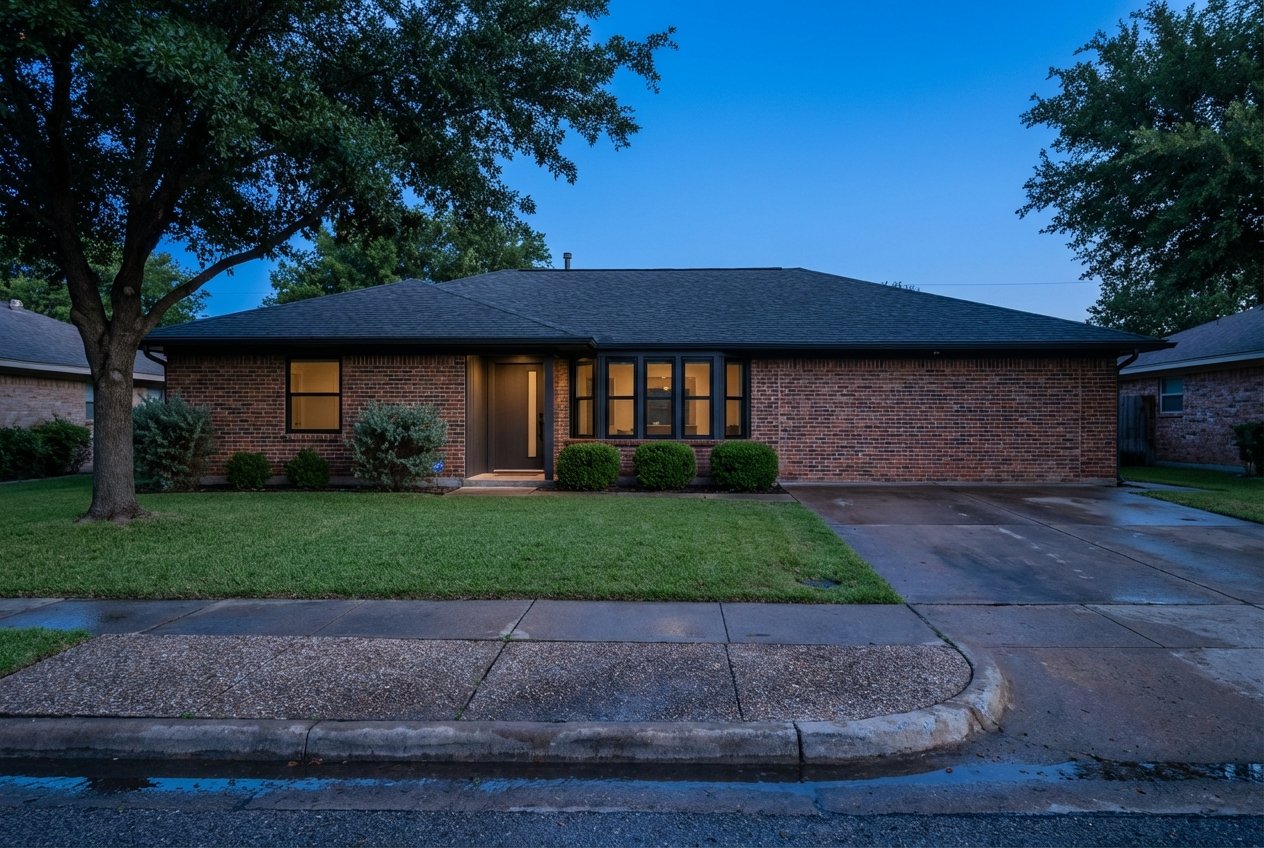
If you like established neighborhoods with modest lots and mature streets, River Oaks will fit your eye. Single-family homes are the dominant land use, and many properties date from the 1930s to 1950s. You’ll find a lot of one-story, mid-century ranch and traditional styles, typically around 700 to 1,800 square feet, plus occasional newer infill or expanded homes. The overall character is mid-century residential with a few newer builds sprinkled in.
Price signals to watch
Recent data providers show a wide range because they track different metrics. For example, one market snapshot reported a median sale price of about $181,000 (Jan 2026), while a separate home-value index showed about $216,892 (through Jan 31, 2026). A third source tracked a median list price near $265,000 (June 2025). These numbers don’t conflict; they simply measure different things (sale vs. value index vs. list) and rely on different methods.
Practical takeaway: many older single-family homes in River Oaks have traded in a broad band from the low-to-mid $100Ks to the mid $200Ks depending on size and condition. Renovated or larger infill homes can trade higher, with examples reaching $400K or more. Always check the date and the metric when you compare price claims.
What drives value in this market
Because the city is mostly built out, you’re competing for established homes rather than a steady flow of new construction. Condition matters a lot. Many mid-century properties will need some level of updating, from systems and roof to kitchens and baths. If you want turnkey, plan to pay a premium relative to similar-size homes that need work.
Buyer checklist for older homes
- Budget for updates. Line items can include HVAC, roof, electrical, plumbing, windows, and energy-efficiency improvements.
- Verify permits and scope on additions or garage conversions. Older homes often have changes over time.
- Order a strong inspection and consider specialty checks (foundation, sewer line) if recommended by your inspector.
- Compare recent neighborhood sales by size and condition so you’re not overpaying for cosmetic updates.
Parks and green space
City parks you’ll actually use
River Oaks maintains a network of small neighborhood parks. The 2023 Parks Master Plan highlights McGee Park (the city’s primary ballfield complex) along with Wooldridge Park, Masonic Park, Community Park, Lone Star JR Park, Lions Triangle, and Heritage Park. Expect walkable, local spaces rather than large destination parks, with ongoing small-scale improvements supported by the City and the Parks Foundation.
- See the city’s parks and programs: River Oaks Parks Department
Nearby outdoor options
If you want bigger green spaces, the West Fork of the Trinity River corridor and Lake Worth are close by. Trails and water access in the Trinity corridor expand your options for biking, running, and paddling. YMCA Camp Carter operates nearby with outdoor programs referenced in planning materials, including an equestrian center.
- Read about the regional context in city planning materials: City of River Oaks planning document
Schools overview
River Oaks is served by Castleberry Independent School District (CISD). Schools that serve city residents include A.V. Cato Elementary, Castleberry Elementary, Irma Marsh Middle School, and Castleberry High School. If schools are a top priority for you, review district boundaries, program offerings, and the latest accountability information before you buy, since these can change from year to year.
- Explore district resources and campuses: Castleberry ISD site
- See district communications that reference accountability and recognition: Castleberry ISD updates
Note: Use current Texas Education Agency (TEA) reports for the most up-to-date accountability ratings before making a decision based on school performance.
Commutes and getting around
Key roads and routes
River Oaks is bordered and connected by several major corridors: River Oaks Boulevard/State Highway 183, Jacksboro Highway/State Highway 199, Roberts Cut-Off, Meandering Road, and Loop 820. These routes provide straightforward access to west and central Fort Worth, as well as to nearby commercial and employment nodes.
- See corridor details in the city’s plan: City of River Oaks planning document
Typical drive times
The American Community Survey shows a mean travel time to work in the ~28 to 29 minutes range for River Oaks residents, which blends local and regional commutes. If you’re driving to central Fort Worth, a realistic door-to-door estimate is roughly 10 to 25 minutes, depending on your exact start and end points and the time of day. A common planning example shows about 17 minutes under typical, non-peak conditions.
- Check official commute averages: Census QuickFacts
- See a sample drive-time estimate: River Oaks to Fort Worth
Pro tip: test your specific commute during peak hours using your preferred navigation app. Compare both time and variability on multiple days.
Employment hubs nearby
If you work at or near NAS JRB Fort Worth or Lockheed Martin, you’ll likely have a very short commute from River Oaks. The Alliance/Alliance Town Center area to the north is farther and can vary widely in travel time. For those jobs, always run a live route test during morning and evening peaks.
- City planning documents note proximity to defense and aviation employers: City of River Oaks planning document
What to know about transit
Public transit is present but limited. Trinity Metro operates bus routes on nearby corridors, such as Route 022 and Route 046 along Jacksboro Highway, with connections to transfer centers and Fort Worth Central Station. Many residents still choose to drive, but regional rail options like TEXRail and the Trinity Railway Express are accessible via a short drive to Central Station for park-and-ride style commutes.
- Plan your bus connections and transfers: Trinity Metro routes and schedules
Who River Oaks fits
- You want an established, budget-friendlier entry to the Fort Worth area compared to citywide medians.
- You prefer mid-century homes and can balance condition, updates, and value.
- Your routine points west or central within Fort Worth, where drives are short and predictable.
- You want neighborhood parks nearby and easy access to the Trinity River corridor and Lake Worth.
If you check several of these boxes, River Oaks deserves a look.
Next steps for buyers
- Define your price range and how much of your budget you want to reserve for updates.
- Test your commute to multiple destinations at peak hours.
- Review Castleberry ISD resources, boundaries, and current accountability information.
- Compare recent neighborhood sales by size and condition to sharpen your offer strategy.
When you’re ready for a measured, concierge-level approach to your next move or a Texas relocation, connect with an advisor who will help you analyze condition, pricing, and timing with clarity. For discreet guidance and a results-focused plan, reach out to Hedley Karpas.
FAQs
How big is River Oaks, TX and where is it?
- River Oaks is a small, fully developed city of about 1.9 to 2.0 square miles on the west side of the Fort Worth area in Tarrant County.
What types of homes are common in River Oaks?
- You’ll mainly see single-family, mid-century homes from the 1930s to 1950s, often one-story ranch or traditional styles in the 700 to 1,800 square foot range, plus occasional newer infill.
What do homes cost in River Oaks right now?
- Recent figures vary by metric and date: a median sale price around $181,000 (Jan 2026), a home-value index near $216,892 (through Jan 31, 2026), and a median list price near $265,000 (June 2025); many older homes trade from the low-to-mid $100Ks to mid $200Ks, with renovated or larger homes higher.
Which school district serves River Oaks?
- Castleberry ISD serves River Oaks, with A.V. Cato Elementary, Castleberry Elementary, Irma Marsh Middle School, and Castleberry High School; always verify boundaries and the latest accountability reports.
How long is the commute to downtown Fort Worth?
- A typical drive from River Oaks to central Fort Worth ranges about 10 to 25 minutes depending on time of day, while the area’s mean commute across all jobs is roughly 28 to 29 minutes.
Is public transit available in River Oaks?
- Trinity Metro operates bus routes on nearby corridors with connections to Fort Worth Central Station for rail transfers, but most residents rely on driving for daily commutes.