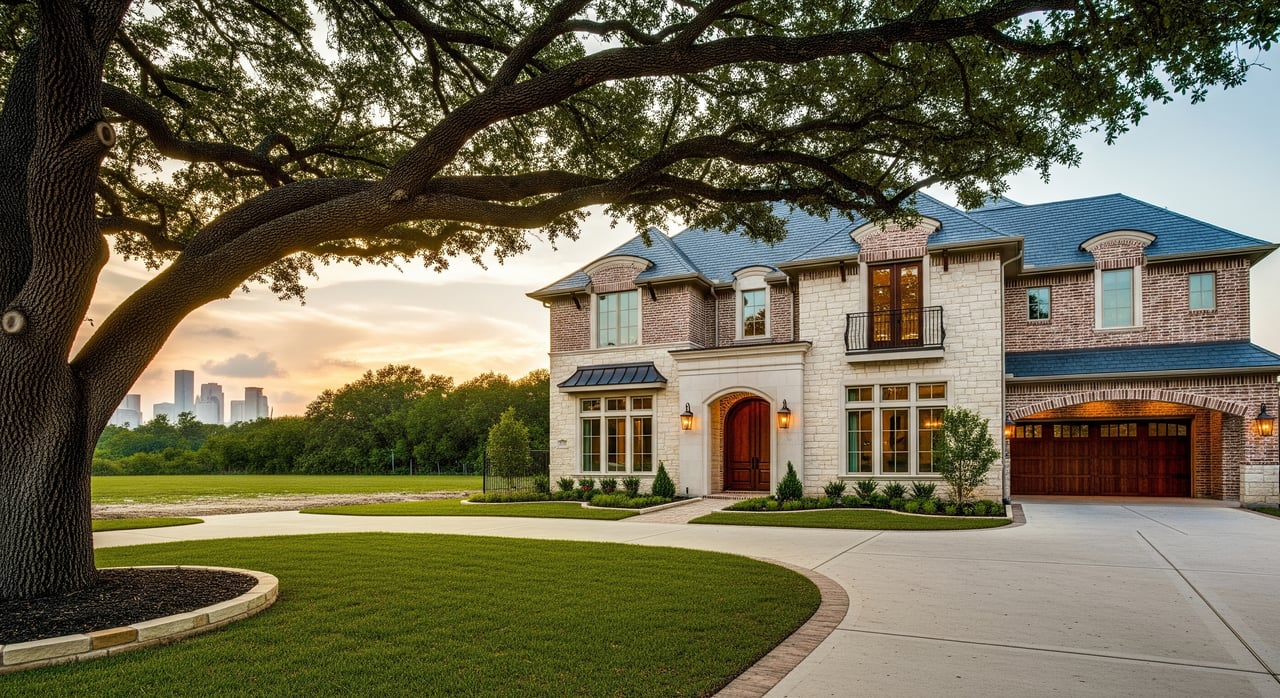
Is your Bellaire property worth more as a teardown or as a finished new build? It is a big question with real money on the line, especially with scarce land and discerning buyers inside the Loop. You want a clear, defensible way to separate lot value from the house and price with confidence. This guide walks you through proven valuation methods, local site factors, and appraisal realities so you can make a smart move in the next few months. Let’s dive in.
Why lot value drives price in Bellaire
Bellaire sits inside the Loop with limited vacant land and established, larger lots. That scarcity puts extra weight on the dirt compared to many suburbs. Lot width, buildable area, mature trees, drainage rules, and easements can swing value more than cosmetic updates. Buyer segments vary too, from builders and investors to local owner-occupants, and each group values lots and improvements differently.
When vacant lots are rare, teardown sales become the best window into raw land value. In Bellaire, that means you often learn the most from how buyers treat older homes they plan to remove. Your pricing should reflect that reality.
How to separate land from improvements
Sales comparison of vacant lots
If recent vacant-lot sales exist inside Bellaire, use them first. Adjust for size, frontage, utilities, elevation, and location within the city. If data are thin, use nearby areas like West University Place or Meyerland as secondary references with careful adjustments. Cross-check your findings against current market trends from the Houston Association of Realtors.
Allocation method
This method applies market ratios to split a whole sale price into land and improvements. Start with recent, truly comparable sales that match lot size and building type. Use the ratio of land-to-total price from those comps to allocate value to your subject property. It is a quick way to triangulate when direct lot sales are scarce.
Extraction, also called land residual
From recent sales of older homes or teardowns, subtract the depreciated improvement value to isolate the implied land value. Include demolition and site clearance costs, and any sales or carrying costs relevant to a builder’s decision. This approach is practical in teardown-heavy markets like Bellaire where true vacant-lot comps are limited.
Cost approach for new construction
Estimate replacement cost new for the house and add land value estimated by one of the methods above. Appraisers often use this in combination with sales comparison for finished new homes. It is useful, but accuracy still depends on getting the land number right.
Residual land value for builders
Start with the expected sale price of the finished home based on recent new construction comps. Subtract hard and soft construction costs, financing, desired profit, and carrying costs. The remainder is the maximum rational land price. This is builder math, and it is sensitive to assumptions, so use conservative estimates.
Site factors that move lot value
- Buildable area and setbacks. Lot coverage limits, utility easements, and required setbacks shape the envelope you can actually build.
- Trees and mitigation. Mature trees can add appeal, but removal or protection can carry costs and permitting steps.
- Floodplain and elevation. FEMA maps and local floodplain rules affect design choices, engineering, and buyer perceptions. Check the FEMA Flood Map Service Center and Harris County floodplain resources at the Harris County Flood Control District.
- Utilities and off-site work. Sewer, water, gas, and electric connection or relocation can add notable costs.
- Permitting timelines. Longer permit cycles increase carrying costs. Review current requirements with the City of Bellaire to avoid delays.
Build quality and pricing new construction
What quality means to buyers and appraisers
Quality is not just finishes. It includes structural systems, energy efficiency, HVAC, plumbing and electrical, windows and insulation, and the flow of the floor plan. Outdoor living, covered porches, landscaping, and warranties also matter. Appraisers often classify quality as economy, average, good, or custom, then adjust based on features and functional design.
Quantifying differences
Appraisers look for recent sales with similar quality, then adjust based on price per square foot and specific features. Common adjustments include pool, garage capacity, premium kitchen packages, and professional landscaping. Use local construction cost per finished square foot as a cross-check, while remembering buyers pay for perceived value, not just inputs.
Builder reputation
A well-regarded local builder with a track record for delivery and warranty service can support a premium. Reputation is an intangible, but in Bellaire’s luxury and near-luxury ranges, it can move the needle on both buyer interest and appraisal support.
Choosing comps in Bellaire the right way
Start inside Bellaire first, then look to immediately adjacent neighborhoods if data are thin. Use sales from the past 6 to 12 months whenever possible. Match lots by size, frontage, allowed coverage, buildability, orientation, and flood or elevation status. For new construction pricing, match square footage, quality, year built, and floor plan functionality.
Paired sales analysis
Identify pairs like an older home sale followed by a new build sale on the same lot or a similar adjacent lot. The difference helps quantify land value and the build premium. Multiple paired examples strengthen your conclusions.
Weight sales by buyer intent
If you are selling a teardown, give more weight to sales where the buyer intended to demolish. If you are selling a finished new build, rely on recent new construction closings. Aligning the comp set with the likely buyer profiles improves both pricing accuracy and appraisal support.
Appraisals, lending, and timing
For new construction, appraisers typically blend cost and sales comparison approaches and may require an as-completed opinion for lending. For teardowns, they often use extraction and allocation to support land value, deducting demolition costs and any functional obsolescence. Conventional lenders expect appraisals to support the price, and FHA or VA have additional minimum property standards for new homes.
Permits, final inspections, and certificates of occupancy can affect closings and offers. Incomplete documentation can slow or derail a deal. Taxes also matter, since HCAD will reassess after new construction. Review records and lot details at the Harris County Appraisal District and confirm permit status with the City of Bellaire.
A 3 to 9 month pricing checklist
- Assemble documentation
- Survey, plat, legal description, recent HCAD records, site plan, tree survey, FEMA elevation certificate if available, and utility info.
- Order a pre-listing appraisal or broker CMA focused on land extraction
- Ask for a teardown analysis and an as-completed new-build price opinion.
- Compile recent comps
- Pull teardowns, vacant-lot sales, and new construction in Bellaire first, then nearby areas if needed. Use HAR market data to stay current.
- Get hard, soft, and demolition bids
- Price demolition, site work, utility tie-ins, tree mitigation, and a target spec for the new build.
- Confirm entitlements and timelines
- Contact the City of Bellaire permitting and development office to confirm rules, coverage, and expected timing.
- Choose your pricing path
- If selling as-is, price using extracted land value minus demolition and carrying costs, with room for negotiation.
- If selling a completed new build, price to recent new construction comps and align features with the target band.
- Coordinate for appraisal and lending
- Provide specs, finish schedules, energy features, and warranties to support value.
- Prepare your marketing narrative
- Highlight lot attributes, proximity to parks or services, and site-ready status, and be clear on permits and inspections.
When to sell as a teardown vs a new build
Consider a teardown sale when the existing home is functionally obsolete, sits on a highly desirable lot, and would require heavy renovation to meet buyer expectations. The buyer pool may primarily be builders or buyers planning a major rebuild. In that case, extracted land value from local teardown comps is your best guide.
Lean toward a new build sale when the lot supports a strong floor plan, the spec and finishes match the current buyer band, and recent new construction comps are closing at price points that justify construction costs and profit. Builder reputation and complete permit and inspection files help secure both buyers and appraisal support.
Avoid common pricing pitfalls
- Overbuilding relative to the street or micro-area norms.
- Ignoring floodplain, drainage, and elevation impacts on cost and value.
- Underestimating site and utility work or tree mitigation.
- Using distant or outdated comps instead of Bellaire-focused data.
- Listing before permits, inspections, or documentation are complete.
Partnering early with a local specialist helps you avoid missteps and capture full value. If you want a confidential, data-driven strategy tailored to your lot, schedule a conversation with Hedley Karpas.
FAQs
What is the fastest way to estimate Bellaire lot value?
- Start with recent teardown sales and extract land value, then cross-check with any true vacant-lot sales and nearby paired sales.
How do demolition and site costs affect my price?
- Buyers typically deduct demolition, tree mitigation, utility work, and carry costs from what they will pay for the lot, which lowers the net land value.
Which comps are best for pricing a teardown in Bellaire?
- Use Bellaire teardown sales first, within the last 6 to 12 months, and match lot size, frontage, buildability, and flood or elevation status.
How do appraisers handle brand-new homes?
- They blend cost and sales comparison approaches and rely on recent new construction comps plus as-completed specs, finishes, and warranties.
Where can I verify flood risk and elevation for my lot?
- Check the FEMA Flood Map Service Center and Harris County resources at the Harris County Flood Control District.
What documents should I gather before listing?
- Survey, legal and plat, HCAD records, permit history, site and tree surveys, elevation certificate if available, and detailed spec sheets for new builds.